

By Brian Wright O’Connor
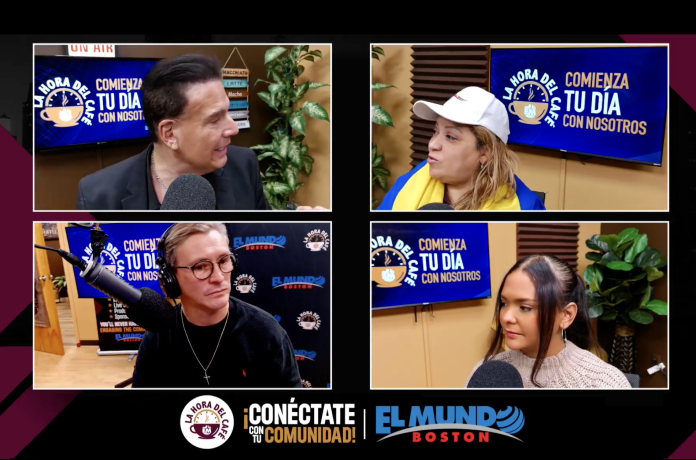
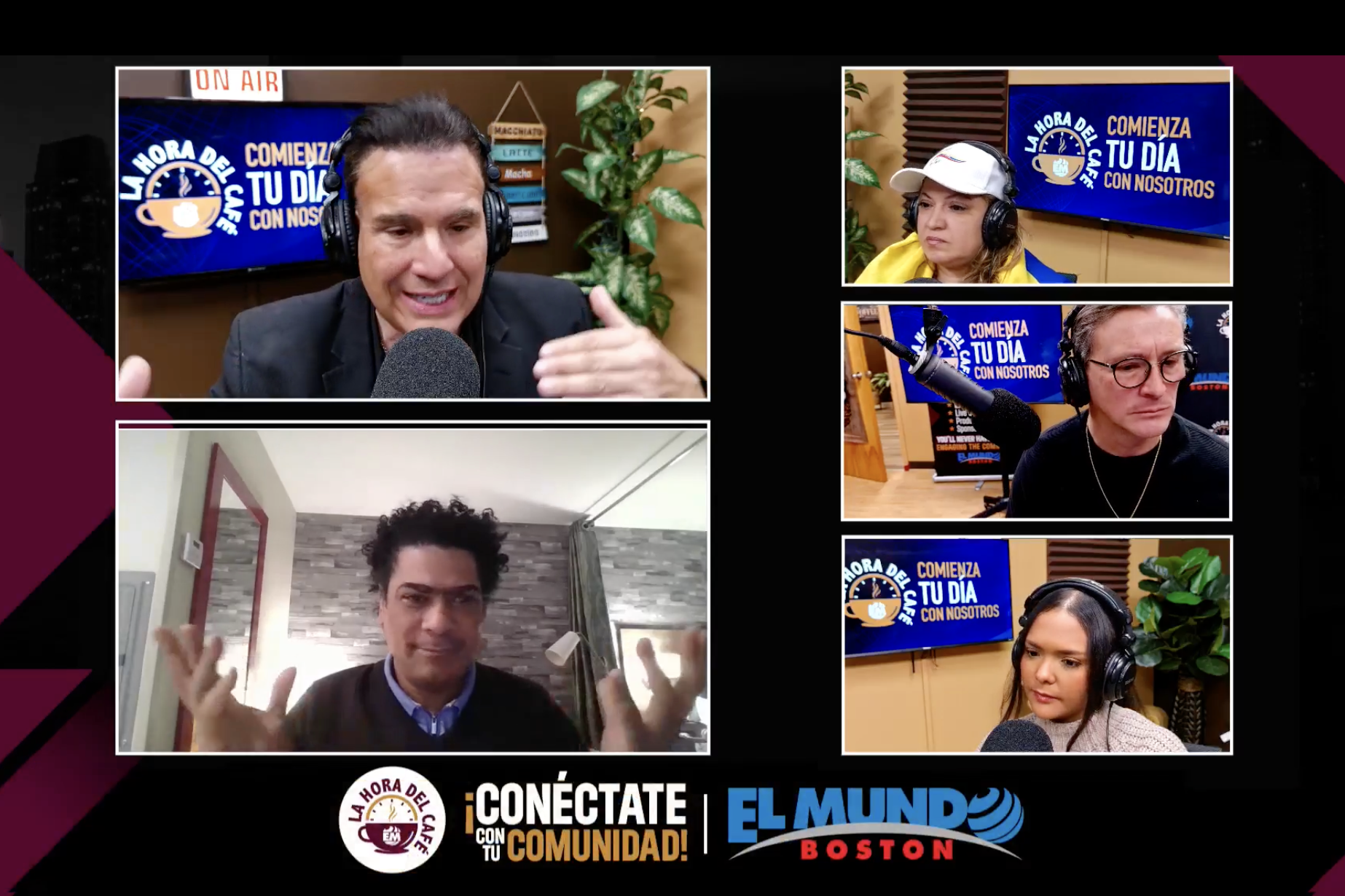
The passions and the politics surrounding Venezuela and its ousted president are taking center stage this week on La Hora del Café, El Mundo Boston’s live-streaming morning show.
Venezuelans living in exile exploded in joy after Nicolas Maduro was snatched early Saturday from a military compound in Caracas and flown in handcuffs to face drug charges in a New York federal court.
The lightning operation by U.S. Special Forces at President Donald Trump’s command fueled hopes among some that Venezuela’s long economic, democratic and human rights nightmare would soon come to end. Others denounced the action, saying it violated international law, gave cover to autocrats in Russia and China for might-makes-right foreign policy, and bypassed Congress’s role in authorizing military strikes against sovereign nations.
Panelists participating in Tuesday’s hour-long program reflected the divide, with host Alberto Vasallo III moderating a largely cordial back-and-forth between two Venezuelan natives, firmly in the camp of Maduro opponents, and a Dominican author and biomedical engineer concerned about legal precedents and the long history of U.S. intervention in Latin America.
“To say that the way Maduro was removed is illegal is to support Maduro,” said Maria Alexandra Bastardo, president of Casa de Venezuela New England, speaking in the studio with a Venezuelan flag draped around her shoulders.
“There was no other way to fix this issue. We tried protests, we tried the democratic process, we tried sanctions, we even won elections. But nothing happened. What President Trump did was just the start of removing the criminals who have run the country for the last 26 years.”
Vasallo, reading a series of reactions to Maduro’s ouster – which also ensnared his wife, Celia Flores, who joined her husband in being arraigned on Monday – portrayed Latin American leaders as divided, either supporting the grab-and-go maneuver or fearing the precedent it set for unilateral action by an increasingly imperial power fixated on Venezuela’s vast oil reserves.
Leonardo Nin, a Harvard-educated scientist and noted author of poems and short stories exploring his Dominican roots, echoed those concerns about resurging colonialism. “I didn’t vote for Trump but that doesn’t give me the right to go to the White House, kill their guards and kidnap him,” said Nin, joining the conversation from a remote location.
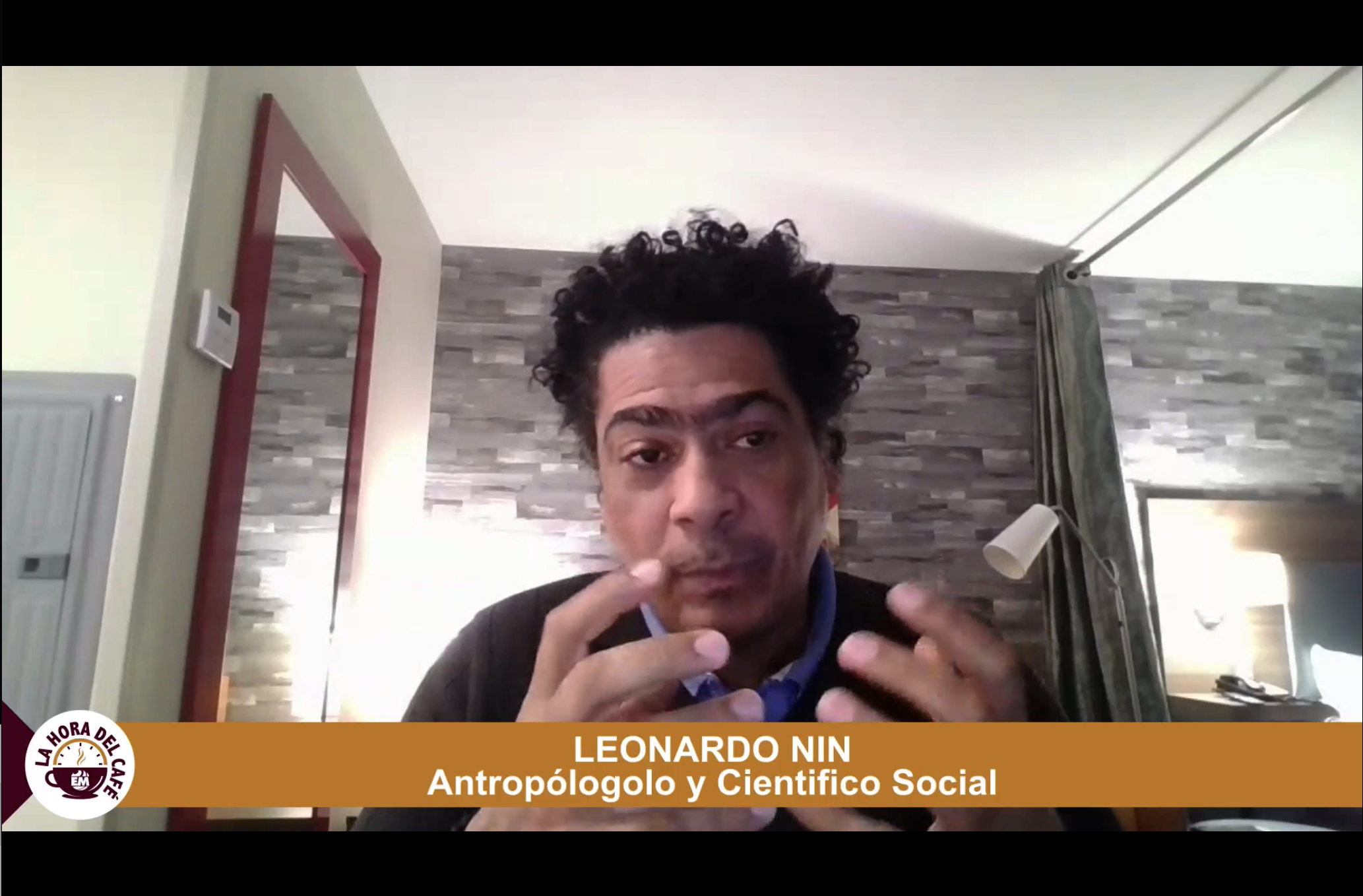
“We cannot just go and randomly take action against leaders the president doesn’t like. We have a Constitution and separation of powers. You cannot just circumvent the power of Congress and invade a country.” Nin added that Mexico and Colombia and even Greenland have been added to the list of Trump’s targets.
Nare Villarroel, a 26-year-old Venezuelan exile who fled the country in 2017, wasn’t buying what she perceived as Nin’s legalistic argument. “When you ask for and then receive a favor, you don’t ask how it’s done. I’m not a big fan of Trump and yet we have to give him this because he’s the only one who was willing to act,” she said.
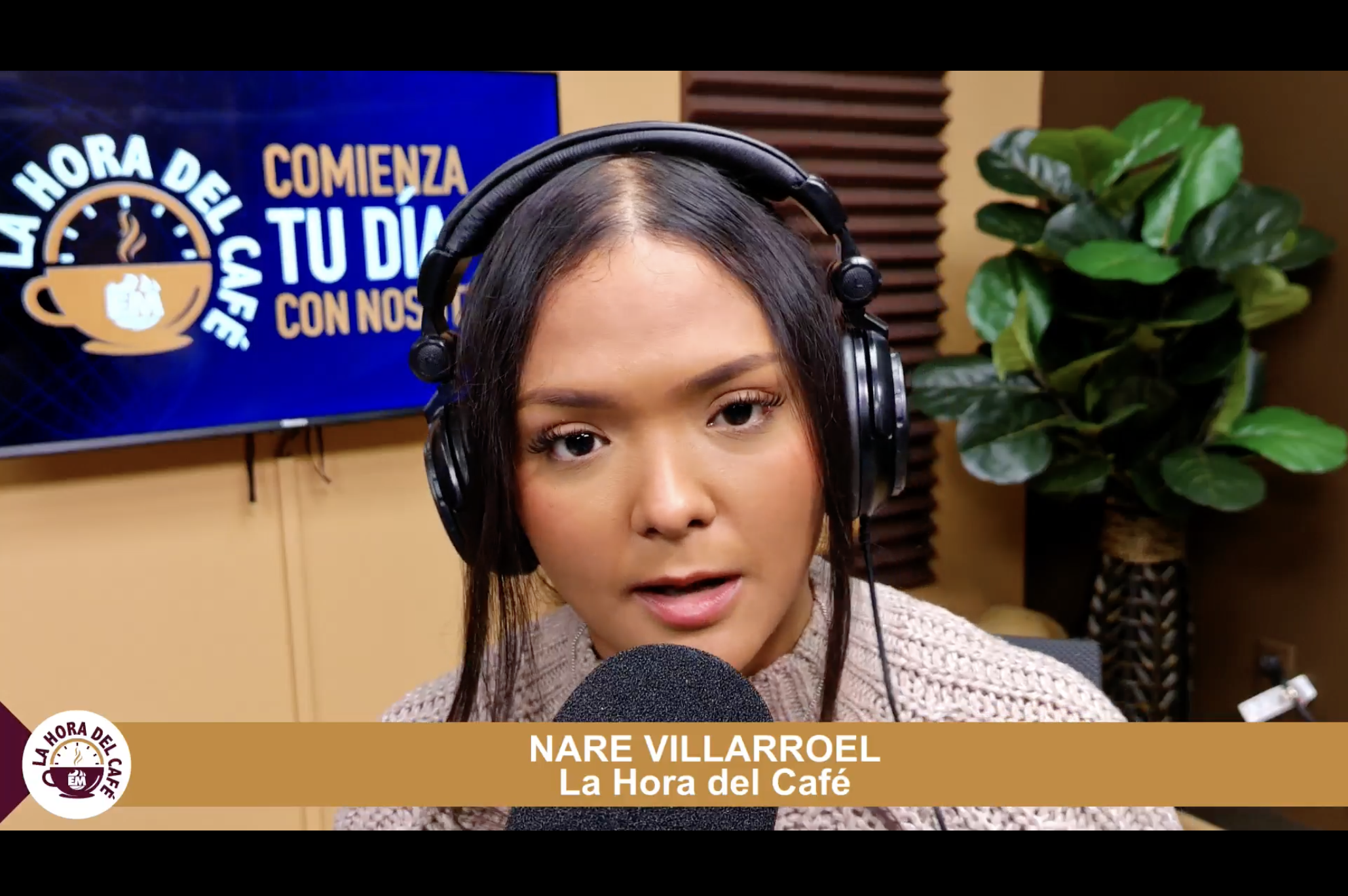
“You can’t talk about sovereignty and ignore the fact that the Venezuelan people have not had sovereignty for the last 26 years. Look, the way they took Maduro is not ideal but it’s what we have. It made me very happy to see him in handcuffs.”
The sharpest exchange during the live discussion occurred when Villarroel demanded a yes-or-no answer from Nin, who has often traveled in Venezuela, as to whether Maduro was a dictator responsible for driving some 8 million of her fellow countrymen into exile. Nin declined to take the bait, doubling-down instead on his position that Maduro’s removal, along with other actions of the Trump administration towards immigrants, amounted to the U.S.’s own slide into authoritarianism.
While Maduro opponents have applauded his removal, U.S. designs on Venezuela’s oil resources and Trump’s decision to work with the ousted president’s successor, Delcy Rodriguez, leave many questions about the country’s economic and political future unanswered.
Rodriguez, a hard-left veteran of the Bolivarian Movement started by Hugo Chavez after his election in 1998, has denounced Trump’s military action against Venezuela but expressed an openness to work with the administration on business proposals.
Serving as vice president before her swearing-in as the interim president, Rodriguez and her brother Jorge, the speaker of the National Assembly, are the children of a Marxist revolutionary who was tortured and died in state custody after he helped engineer the kidnapping of an American business executive in the early 1960s.
Trump, predicting a windfall benefit to the U.S., has scheduled meetings with U.S. oil executives to pitch their return to Venezuela, where Chevron is the only U.S. oil giant with current operations. While continuing punishing economic sanctions against Venezuela and using a naval blockade to disrupt oil shipments, Trump also aims to limit the regime’s assistance to Cuba, which depends on Venezuelan oil to run its increasingly fragile electricity grid.
Trump has also dismissed prominent opposition leader Maria Corina Machado, the Nobel Peace Prize winner who comes from Venezuela’s wealthy elite, as having insufficient respect and support in Venezuela to assume control of the country.
Also sidelined is Edmundo Gonzalez, who stepped in as the unified opposition candidate to challenge Maduro in the 2024 elections after the national election council disqualified Machado. Independent election observers and non-official ballot counts showed that Gonzalez won two-thirds of the vote but the official electoral body declared Maduro the winner.
For the moment, Venezuelan exiles are willing to give Trump the benefit of the doubt.
“We are concerned,” said Maria Alejandra, who left her home in Caracas over 30 years ago for life in the United States. “We want to see the whole gang of criminals removed from power in Venezuela. Delcy is just another criminal. I’m trusting that Trump’s moves so far are only a part of a well-conceived strategy. Full change is not going to occur right away.”
To Villaroel, validating the results of the 2024 election and placing Gonzales in Miraflores, Venezuela’s presidential palace, is the ideal outcome. “The idea that there would be fair elections under Delcy and Jorge Rodriguez is a delusion,” she said.